
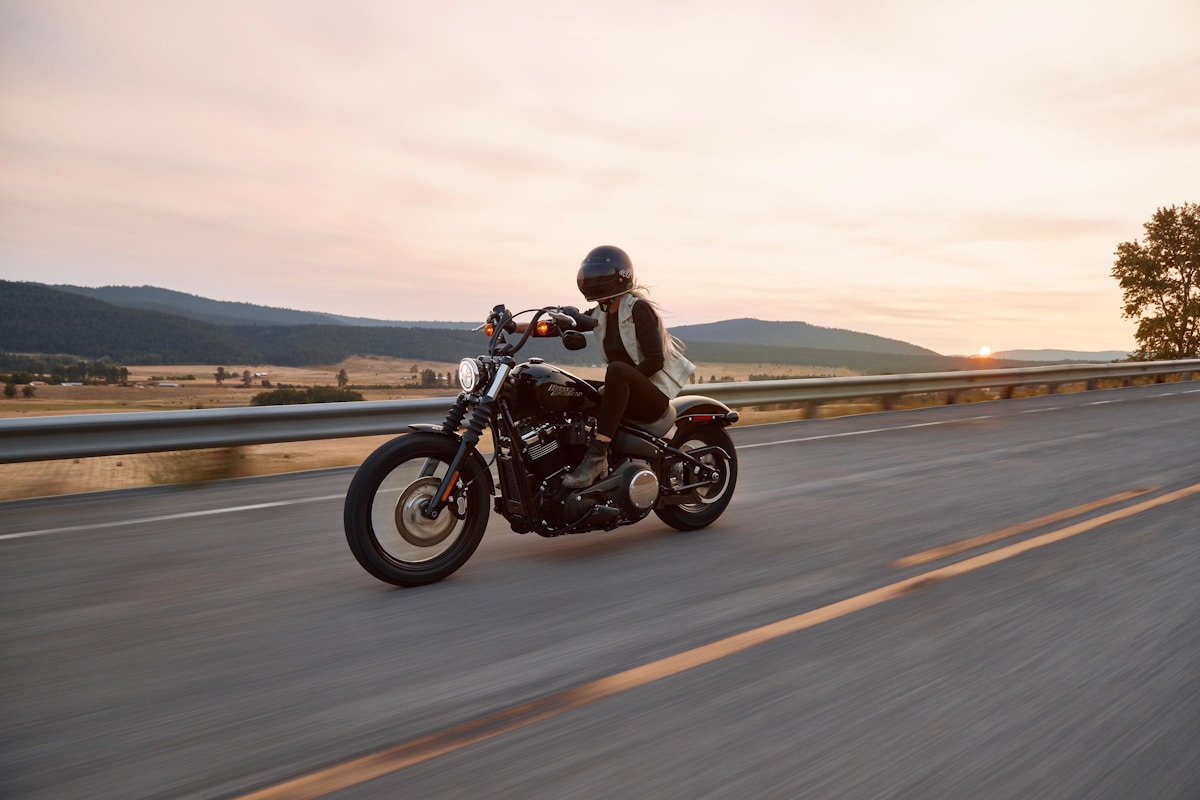
From the winding highways of the Cabot Trail to the vast trails of British Columbia’s backcountry, Canada offers some of the best riding and recreational experiences in the world. Whether you dream of cruising on a motorcycle, tearing through trails on an ATV, gliding across lakes on a personal watercraft, or exploring the wilderness on a snowmobile, recreational vehicle ownership is a deeply Canadian tradition.
But financing a motorcycle or recreational vehicle is quite different from financing a car. Lenders view these purchases differently, seasonal payment plans add complexity, and credit requirements can vary dramatically depending on what you are buying and where you are buying it. This comprehensive guide covers everything you need to know about powersport and recreational vehicle financing in Canada in 2026.
- Motorcycle and RV financing typically requires a minimum credit score of 620-650, though some dealers offer subprime options for scores as low as 550
- Seasonal payment plans let you pay less (or nothing) during winter months, but they extend the loan term and increase total interest paid
- Interest rates for powersport financing generally range from 6.99% to 19.99%, depending on credit score, vehicle type, and whether you buy new or used
- Dealer financing through manufacturers (Harley-Davidson Financial, BRP Financial) often includes promotional rates like 0% for 36 months on new units
- Insurance for motorcycles and recreational vehicles is mandatory in most provinces and can significantly impact your total cost of ownership
Types of Recreational Vehicles You Can Finance in Canada
The term “recreational vehicle” covers a wide range of machines. Each type has its own financing considerations, insurance requirements, and seasonal usage patterns. Let us break down the major categories:
Motorcycles
From small 300cc beginner bikes to large touring machines, motorcycles are the most commonly financed powersport vehicle in Canada. The market includes:
- Sport bikes: Honda CBR, Yamaha YZF, Kawasaki Ninja — typically $5,000-$20,000 new
- Cruisers: Harley-Davidson, Indian, Honda Shadow — typically $10,000-$40,000+ new
- Adventure/Touring: BMW GS, Honda Africa Twin, Yamaha Ténéré — typically $12,000-$30,000 new
- Standard/Naked: Yamaha MT, Kawasaki Z, Honda CB — typically $7,000-$15,000 new
ATVs and Side-by-Sides (UTVs)
All-terrain vehicles and side-by-sides are hugely popular across rural Canada for both recreation and practical use. Prices range from $5,000 for a basic ATV to over $30,000 for a fully loaded side-by-side like the Can-Am Maverick or Polaris RZR.
Personal Watercraft (PWC)
Sea-Doo (made by Canadian company BRP), Yamaha WaveRunner, and Kawasaki Jet Ski are the main brands. New units range from $7,000 to $20,000+, and financing is widely available through dealers and marine lending specialists.
Snowmobiles
A quintessentially Canadian vehicle, snowmobiles are manufactured by BRP (Ski-Doo), Polaris, and Arctic Cat. New snowmobiles range from $8,000 to $18,000+, and dealer financing is commonly available.
Motorhomes and Travel Trailers (RVs)
Full-size recreational vehicles — from Class C motorhomes to fifth-wheel trailers — represent the largest financing amounts in the recreational category, with prices ranging from $20,000 for a used travel trailer to $500,000+ for a luxury Class A motorhome.
Financing Options for Motorcycles and Recreational Vehicles
Unlike the auto loan market, which is standardized and competitive, powersport and RV financing can be more specialized. Here are your main options:
1. Dealer Financing
Most powersport dealers offer financing through partnerships with lenders. This is the most common and often the most convenient option. Major dealer financing programs include:
- Harley-Davidson Financial Services (HDFS): Offers financing exclusively for Harley-Davidson motorcycles and related products. Known for promotional rates on new models (sometimes 0% for 36-60 months for qualified buyers).
- BRP Financial Services: Finances Can-Am ATVs and side-by-sides, Sea-Doo watercraft, Ski-Doo snowmobiles, and Can-Am Spyder/Ryker three-wheelers. Frequently offers seasonal promotions.
- Yamaha Motor Finance: Covers Yamaha motorcycles, ATVs, side-by-sides, and WaveRunners. Offers competitive rates and sometimes deferred payment promotions.
- Third-party dealer financing: Many dealers work with companies like Accord Financial, Fairstone Financial, or ECN Financial to provide financing options for buyers with various credit profiles.
Promotional Rate Strategy
Manufacturer promotional rates (like 0% for 36 months) are typically reserved for buyers with credit scores of 700+. However, even if you do not qualify for the promotional rate, the dealer may offer a competitive standard rate. Always ask what rate you qualify for — do not assume you will get the advertised promotional rate without checking.
2. Bank and Credit Union Loans
Many banks and credit unions offer personal loans or specific recreational vehicle loans. This option is worth exploring because:
- Credit unions often have more flexible lending criteria than dealers
- You can get pre-approved before shopping, giving you negotiating power
- Interest rates may be competitive with or better than dealer financing, especially for used units
RBC, TD, BMO, Scotiabank, and CIBC all offer personal loans that can be used for recreational vehicle purchases. Rates typically range from 7.99% to 15.99% for personal loans, depending on your credit profile.
3. Marine and RV Specialty Lenders
For larger purchases like motorhomes and boats, specialty lenders offer longer terms and specific expertise:
- North Country Savings (RV loans): Specializes in RV and motorhome financing with terms up to 20 years
- National Bank (Boat and RV loans): Offers dedicated marine and RV lending programs
- Cabot Financial (Powersport): Works with dealers across Canada to finance powersport purchases
4. Personal Line of Credit
If you already have an approved personal line of credit, this can be a flexible and often lower-cost way to finance a recreational vehicle purchase. The advantage is that you only pay interest on the amount you have drawn, and you can pay it down at your own pace. The downside is that credit lines typically have variable rates, which can increase over time.
Credit Requirements for Powersport Financing
Lenders evaluate recreational vehicle loan applications differently than auto loans. Because motorcycles and recreational vehicles are considered discretionary purchases (not essential transportation), lenders often apply stricter criteria.
| Vehicle Type | Minimum Credit Score (Typical) | Typical Rate Range | Maximum Loan Term | Down Payment Required |
|---|---|---|---|---|
| New Motorcycle | 620-650 | 5.99% – 14.99% | 84 months | 0-10% |
| Used Motorcycle | 650-680 | 8.99% – 19.99% | 60 months | 10-20% |
| New ATV/Side-by-Side | 620-650 | 5.99% – 14.99% | 72 months | 0-10% |
| Used ATV/Side-by-Side | 650-680 | 9.99% – 19.99% | 48 months | 10-20% |
| New Snowmobile | 620-650 | 5.99% – 12.99% | 60 months | 0-10% |
| New Personal Watercraft | 620-650 | 6.99% – 14.99% | 60 months | 0-10% |
| Motorhome (Class A/C) | 650-700 | 5.49% – 11.99% | 240 months (20 yr) | 10-20% |
| Travel Trailer | 620-680 | 5.99% – 12.99% | 180 months (15 yr) | 10-15% |
What If Your Credit Is Below the Minimum?
If your credit score falls below the typical minimums listed above, you still have options:
- Larger down payment: Putting 20-30% down can offset a lower credit score in many lenders’ risk models
- Co-signer: A co-signer with good credit can make the difference between approval and denial
- Subprime dealer programs: Some dealers have relationships with subprime lenders that accept scores as low as 500-550, though rates will be significantly higher (18-25%+)
- Build credit first: Consider using a secured credit card or credit builder loan for 6-12 months before applying
Avoid Extremely Long Loan Terms
Some dealers will offer 84 or even 96-month financing to make the monthly payment look affordable. But recreational vehicles depreciate faster than cars, and a long loan term virtually guarantees you will be underwater for years. For motorcycles and ATVs, try to keep your loan term at 48-60 months maximum. For motorhomes, terms up to 15-20 years may be reasonable given the higher purchase price and slower depreciation of well-maintained units.

Understanding Seasonal Payment Plans
One of the unique aspects of powersport and recreational vehicle financing in Canada is the availability of seasonal payment plans. Since many of these vehicles are only used during specific seasons, some lenders offer payment structures that reflect this usage pattern.
How Seasonal Payments Work
A seasonal payment plan typically has two payment tiers:
- In-season payments: Higher monthly payments during the months when you are actively using the vehicle (e.g., May through October for a motorcycle)
- Off-season payments: Reduced payments or interest-only payments during winter months (e.g., November through April)
Some plans even offer complete payment holidays during the off-season, though interest continues to accrue on the outstanding balance during this period.
The True Cost of Seasonal Payment Plans
While seasonal plans offer cash flow flexibility, they typically cost more in total interest than a standard fixed-payment loan. Here is a comparison:
| Payment Structure | Amount Financed | Rate | Term | Total Interest Paid |
|---|---|---|---|---|
| Standard Fixed (12 months/year) | $15,000 | 8.99% | 48 months | $2,877 |
| Seasonal (8 months/year) | $15,000 | 8.99% | 48 months | $3,650 |
| Seasonal with Winter Holiday | $15,000 | 8.99% | 48 months | $4,120 |
In this example, the seasonal plan with a winter payment holiday costs an extra $1,243 in interest compared to the standard plan. That is the price of cash flow flexibility.
Seasonal payment plans sound appealing, but they are designed to benefit the lender as much as the borrower. Before opting for seasonal payments, ask yourself: can I afford to make standard payments year-round? If yes, the standard plan will save you money.
Step-by-Step Guide to Financing a Motorcycle or Recreational Vehicle
-
Determine What You Can Afford
Before you start browsing dealer inventories, establish your budget. For recreational vehicles — which are not essential transportation — financial advisors generally recommend that total recreation vehicle costs (payment, insurance, storage, maintenance) should not exceed 5-8% of your gross monthly income. If you earn $60,000 per year ($5,000/month), that means keeping total costs under $250-$400 per month. Remember that recreational vehicles come with seasonal costs beyond the payment — winter storage for a motorcycle can run $50-$150 per month, and seasonal maintenance and riding gear add further costs.
-
Check Your Credit and Get Pre-Approved
Pull your credit reports from Equifax and TransUnion. If your score is above 650, you should have multiple financing options. If it is between 550 and 650, focus on credit unions and dealer subprime programs. Get pre-approved from at least one lender (ideally a credit union or your bank) before visiting any dealers. This gives you a baseline rate to compare against dealer offers and prevents you from being pressured into an unfavourable deal on the spot.
-
Research the Market and Choose Your Vehicle
Use resources like Kijiji, AutoTrader, and manufacturer websites to research pricing. For used powersport vehicles, check Canadian Kelley Blue Book values (where available) or review completed sales listings to understand fair market value. Consider total cost of ownership — a used Japanese motorcycle (Honda, Yamaha, Kawasaki, Suzuki) will typically have lower insurance and maintenance costs than a European or American brand. For ATVs and snowmobiles, BRP (Can-Am, Ski-Doo) and Polaris have the largest dealer networks in Canada, which matters for warranty service and parts availability.
-
Visit Dealers and Compare Financing Offers
Visit 2-3 dealers and compare not just vehicle prices but financing offers. Ask each dealer for a written quote that includes: the vehicle price, all fees and taxes, the interest rate (APR), the loan term, the monthly payment, and the total cost of financing. Compare these quotes side by side and against your pre-approval offer. Do not let a dealer pressure you into a same-day decision — take the quotes home and compare them carefully.
-
Secure Insurance Before Taking Delivery
In most Canadian provinces, you must have valid insurance before you can register and ride a motorcycle, ATV (on roads), or personal watercraft. Get insurance quotes from multiple providers before finalizing your purchase. Powersport insurance rates vary dramatically by provider — getting three or four quotes can save you hundreds of dollars per year. Make sure your coverage meets both provincial minimums and your lender’s requirements (most lenders require comprehensive and collision coverage).
-
Finalize the Purchase and Plan for Ongoing Costs
Once you have chosen your vehicle and financing, review all paperwork carefully before signing. Create a budget that accounts for all ongoing costs: loan payment, insurance, fuel, storage (if applicable), maintenance, registration, riding gear and safety equipment, and any club memberships or trail passes. Having a clear picture of all costs prevents financial surprises down the road.
One thing buyers consistently underestimate is the cost of proper riding gear. For motorcycles, a quality helmet, jacket, gloves, and boots can easily run $1,500 to $3,000. For snowmobiling, you need a helmet, suit, boots, and gloves — another $800 to $2,000. Budget for this on top of your vehicle costs. It is not optional — it is a safety requirement and, in many provinces, a legal one.
Insurance Requirements for Motorcycles and Recreational Vehicles
Insurance is a critical — and often expensive — component of recreational vehicle ownership in Canada. Requirements and costs vary significantly by province and vehicle type.
Motorcycle Insurance
Motorcycle insurance is mandatory in all Canadian provinces. Here is a breakdown of key provincial considerations:
| Province | Insurance Provider | Average Annual Premium (Sport Bike) | Average Annual Premium (Cruiser) | Key Notes |
|---|---|---|---|---|
| Ontario | Private insurers | $2,500 – $5,000+ | $1,200 – $2,500 | Most expensive province; sport bikes cost the most |
| British Columbia | ICBC (basic) + private (optional) | $1,500 – $3,000 | $800 – $1,500 | ICBC provides basic; can add private optional coverage |
| Alberta | Private insurers | $1,500 – $3,500 | $800 – $1,800 | Rates vary widely by insurer |
| Quebec | SAAQ (injury) + private (property) | $600 – $1,800 | $400 – $1,000 | Split system — SAAQ covers injuries, private covers vehicle |
| Manitoba | MPI | $1,200 – $2,500 | $600 – $1,400 | Public insurer; rates based on vehicle use and type |
| Saskatchewan | SGI | $1,000 – $2,200 | $500 – $1,200 | Public insurer with optional private extensions |
ATV and Side-by-Side Insurance
ATV insurance requirements vary by province and how the vehicle is used. If you ride on public roads or trails (where permitted), insurance is typically mandatory. For private property use only, insurance may be optional but is strongly recommended. Average annual premiums range from $200 to $800 depending on the vehicle value, your driving record, and your province.
Snowmobile Insurance
Snowmobile insurance is mandatory in Ontario (required for trail permits through the Ontario Federation of Snowmobile Clubs) and strongly recommended in all other provinces. Average annual premiums range from $150 to $500. Most policies include liability coverage, collision, and theft protection.
Personal Watercraft Insurance
While not legally mandatory in most provinces, PWC insurance is strongly recommended and usually required by lenders if you are financing the purchase. Average annual premiums range from $200 to $600.
Motorhome and Travel Trailer Insurance
RV insurance is mandatory for any motorhome or trailer driven or towed on public roads. Policies are similar to auto insurance but may include additional coverage for personal belongings, awnings, and attached equipment. Annual premiums range from $800 to $3,000+ depending on the value of the unit and how it is used (full-time living vs. recreational use).
Dealer Financing vs. Independent Financing: A Detailed Comparison
One of the biggest decisions you will face is whether to use the dealer’s financing or arrange your own. Here is a detailed comparison to help you decide:
| Factor | Dealer Financing | Independent Financing (Bank/Credit Union) |
|---|---|---|
| Convenience | High — one-stop shopping | Lower — requires separate application |
| Promotional Rates | Often available (0%, 1.99%, etc.) | Rarely available |
| Standard Rates | Generally higher (may include dealer markup) | Often lower (no middleman markup) |
| Approval Speed | Fast — often same day | Moderate — 1-5 business days |
| Negotiation Leverage | Limited if you have not compared | Strong — you have a firm offer to compare |
| Seasonal Payment Options | Commonly available | Rarely available |
| Credit Score Required | Varies — some accept very low scores | Generally higher minimums |
| Add-on Products | May be bundled (extended warranty, etc.) | No bundling — loan only |
The Best of Both Worlds
The smartest approach is to get pre-approved from a bank or credit union first, then see if the dealer can beat that rate. If the dealer offers a legitimate promotional rate (like 0% for 36 months) that beats your pre-approval, take the dealer offer. If the dealer’s standard rate is higher than your pre-approval, use your own financing. This way, you always get the best available rate.
Used Recreational Vehicle Buying Tips
The used powersport market in Canada offers tremendous value, but it comes with risks that new buyers may not anticipate. Here is what to watch for:
Seasonal Buying Patterns
The best time to buy a used motorcycle in Canada is typically October through February — when demand is lowest and sellers are motivated to avoid paying for winter storage. Similarly, used snowmobiles are cheapest in spring and summer. Understanding these seasonal patterns can save you 10-20% on the purchase price.
What to Inspect on a Used Motorcycle
- Frame and forks: Check for signs of impact, bending, or repair. A bent frame is often a write-off.
- Engine: Listen for unusual noises. Check oil colour (should be amber, not black or milky).
- Chain and sprockets: Worn chains and sprockets indicate either high mileage or poor maintenance.
- Tires: Check tread depth and look for cracking on sidewalls. Motorcycle tires cost $300-$700 to replace (pair).
- Brakes: Check pad thickness and disc condition. Feel for pulsation when squeezing the lever.
- Electrical: Test all lights, turn signals, horn, and instruments.
What to Inspect on a Used ATV or Side-by-Side
- Frame and A-arms: Look for bends, cracks, or signs of welding repair
- CV boots and axles: Torn CV boots mean expensive repairs are coming
- Skid plate: Heavy damage to the skid plate suggests aggressive use
- Winch (if equipped): Test it under load to make sure the motor and cable are in good condition
- Belt (CVT): Ask when the drive belt was last replaced — this is a common wear item ($100-$300)
Financing for First-Time Motorcycle Riders
If you are new to motorcycling, your financing and purchasing decisions are particularly important. Here are some specific recommendations:
Licensing Requirements by Province
Before you can ride a motorcycle on public roads in Canada, you need a motorcycle licence. The process varies by province but generally includes:
- Written knowledge test: Covers rules of the road specific to motorcycling
- Riding course: Highly recommended and sometimes mandatory. Provincial programs include Ontario’s M1/M2 system, BC’s graduated licensing, and Alberta’s training programs.
- Road test: Practical riding exam with an examiner
Many insurance companies offer discounts (10-15%) for riders who have completed a recognized motorcycle safety course. The course cost ($400-$800) can pay for itself in insurance savings within the first year or two.
Beginner Bike Recommendations
For your first motorcycle, choose something manageable that you will not outgrow too quickly. Good beginner options that hold their value well (important for financing) include:
| Motorcycle | Engine Size | Approximate New Price | Why It Is Good for Beginners |
|---|---|---|---|
| Honda CBR300R | 286cc | $5,399 | Lightweight, forgiving, excellent fuel economy |
| Yamaha MT-03 | 321cc | $5,699 | Upright riding position, easy to handle |
| Kawasaki Ninja 400 | 399cc | $6,199 | More power for highway riding, still manageable |
| Royal Enfield Meteor 350 | 349cc | $5,699 | Relaxed cruiser style, low seat height |
| Honda Rebel 500 | 471cc | $7,599 | Cruiser style with manageable power, very popular |
Start Small and Trade Up
Buy a reliable used beginner motorcycle for $3,000-$5,000, ride it for one or two seasons to build your skills (and your credit), and then trade up to your dream bike. This approach saves you money on insurance (smaller bikes are cheaper to insure), protects you from damaging an expensive motorcycle while learning, and gives you time to build credit for a better financing rate on the bike you really want.

Financing a Motorhome or Travel Trailer
Motorhome and travel trailer financing works differently from powersport financing due to the higher purchase prices and longer useful life of these vehicles. Here are the key considerations:
Loan Terms and Amortization
Because motorhomes and travel trailers are more expensive, lenders offer longer loan terms — up to 20 years for new units valued at $100,000 or more. This keeps monthly payments manageable but increases total interest costs significantly.
| RV Type | Typical Price Range | Available Loan Terms | Typical Rate Range |
|---|---|---|---|
| Travel Trailer (towable) | $15,000 – $60,000 | 5-15 years | 5.99% – 10.99% |
| Fifth Wheel | $30,000 – $120,000 | 10-20 years | 5.49% – 9.99% |
| Class C Motorhome | $80,000 – $200,000 | 10-20 years | 5.49% – 9.99% |
| Class A Motorhome | $150,000 – $500,000+ | 15-20 years | 4.99% – 8.99% |
| Truck Camper | $10,000 – $50,000 | 5-10 years | 6.99% – 12.99% |
Full-Time Living Considerations
An increasing number of Canadians are living in their RVs full-time, whether by choice (the “vanlife” movement) or necessity (housing affordability). If you plan to live in your RV full-time, be aware that:
- Some lenders will not finance RVs intended for full-time living
- Insurance for full-time RV living is more expensive and harder to find
- Provincial residency rules may be affected — you still need a permanent address for many government services
- Campground fees and seasonal site rentals ($500-$2,000/month) are an ongoing cost to factor into your budget
Tax Considerations for Recreational Vehicle Financing
In some cases, recreational vehicle interest may be tax-deductible in Canada:
- Business use: If you use a motorcycle, ATV, or RV for business purposes (e.g., a guide service, farm use), the interest and other costs may be deductible as business expenses
- Full-time RV living: If your RV is your primary residence and you are self-employed, a portion of costs may be deductible as a home office expense
- GST/HST credits: If you are a GST-registered business, you may be able to claim Input Tax Credits on the GST/HST paid on the purchase
Always consult a Canadian tax professional for advice specific to your situation. The rules around recreational vehicle tax deductions are complex and depend on your specific circumstances.
Join 10,000+ Canadians who started their credit journey with Credit Resources.
GET STARTED NOWProtecting Your Investment: Storage, Maintenance, and Extended Warranties
Winter Storage for Motorcycles and Watercraft
In most of Canada, motorcycles and watercraft need proper winter storage for 4-6 months of the year. Your options include:
- Home storage (garage/shed): Free if you have space, but requires proper winterization
- Heated indoor storage facility: $75-$200 per month depending on the facility and your location
- Unheated indoor storage: $40-$100 per month
- Dealer storage: Many dealers offer winter storage packages that include winterization, storage, and spring preparation for $400-$800 for the season
Maintenance Schedules
Recreational vehicles have specific maintenance requirements that affect your overall cost of ownership. Budget for these recurring costs:
- Motorcycle oil changes: Every 5,000-10,000 km ($50-$150 per service)
- Motorcycle tires: Every 10,000-20,000 km ($300-$700 per set)
- ATV/UTV belt replacement: Every 3,000-5,000 km ($100-$300)
- Snowmobile track and slides: Every 3,000-5,000 km ($200-$600)
- PWC impeller and wear ring: Every 100-200 hours ($150-$400)
- RV roof inspection and sealing: Annually ($100-$500)
Extended Warranties: Worth It?
Dealers will almost certainly offer extended warranties. Whether they are worth the cost depends on several factors:
- For new vehicles from reliable manufacturers: Often not worth it — the factory warranty covers the most likely failure period
- For used vehicles outside factory warranty: Can be worth considering, especially for complex vehicles with electronic systems
- For RVs and motorhomes: Often worth it — RV repairs can be extremely expensive due to the combination of automotive, plumbing, electrical, and structural systems
If you do purchase an extended warranty, read the contract carefully. Understand what is covered, what is excluded, the deductible amount, and where you can have warranty work performed.

Frequently Asked Questions About Motorcycle and RV Financing in Canada
Most dealer financing programs require a minimum credit score of 620-650 for motorcycle loans. However, some subprime lenders and in-house dealer financing programs will accept scores as low as 500-550, though you can expect interest rates in the 15-25% range. Credit unions may evaluate your application more holistically, considering your overall financial picture rather than just your credit score. A larger down payment (20% or more) can help offset a lower credit score and improve your approval chances.
Financing a used motorcycle from a private seller is more challenging than financing through a dealer, but it is possible. Personal loans from banks or credit unions can be used for private purchases. Some credit unions also offer specific powersport loans for private sales if you provide a bill of sale and proof of insurance. The advantage of buying privately is typically a lower purchase price; the disadvantage is that you will not have dealer support for warranty claims or initial setup. Always have a mechanic inspect any used motorcycle before purchasing.
Seasonal payment plans allow you to make higher payments during the riding or usage season and lower payments (or no payments) during the off-season. For motorcycles, you might pay the full amount from May to October and a reduced amount from November to April. Interest continues to accrue during the reduced-payment period, so you will pay more total interest over the life of the loan compared to a standard fixed-payment plan. These plans are typically offered through dealer financing programs and are not commonly available from banks or credit unions.
If your motorcycle is financed, the lender will require you to carry comprehensive and collision coverage in addition to the mandatory liability coverage required by your province. This protects the lender’s interest in the vehicle. You will also need to list the lender as a loss payee or lienholder on your insurance policy. Minimum liability coverage requirements vary by province but are typically $200,000 to $500,000. Many financial advisors recommend carrying at least $1 million in liability coverage. Optional coverages like uninsured motorist protection, roadside assistance, and medical payments are strongly recommended for motorcyclists.
Leasing is not commonly available for motorcycles, ATVs, snowmobiles, or personal watercraft in Canada — financing is the standard option. For motorhomes and travel trailers, leasing is occasionally available but is relatively rare. The main advantage of financing over leasing is that you own the vehicle at the end of the term, which means you build equity and can sell or trade it in. Given the limited availability of powersport leasing in Canada, financing (either through a dealer, bank, or credit union) is your primary option.
Yes, and farm use may provide additional financing advantages. Farm Credit Canada (FCC) offers loans for agricultural equipment, which can include ATVs and side-by-sides used for farm operations. These loans often have competitive rates and flexible terms designed for agricultural businesses. Additionally, if the ATV or side-by-side is used primarily for farming, the purchase may qualify for tax benefits under the Income Tax Act’s capital cost allowance provisions. Consult with an agricultural lender or accountant for specifics on how farm use affects your financing options and tax situation.
For motorcycles, ATVs, and personal watercraft, aim for a down payment of at least 10-20%. A larger down payment reduces your loan amount, gets you a better interest rate, and protects you from being underwater on the loan (owing more than the vehicle is worth). For motorhomes and travel trailers, 10-20% is standard, though some lenders may require more for used units. If you have challenged credit, a down payment of 20-30% significantly improves your approval chances and can help you qualify for a better rate. Remember that the more you put down, the less you pay in total interest over the life of the loan.
Final Thoughts: Making Smart Recreational Vehicle Financing Decisions
Recreational vehicles bring joy, adventure, and a uniquely Canadian way to experience the outdoors. But because they are discretionary purchases — not necessities — it is especially important to make smart financing decisions. A motorcycle or ATV should enhance your life, not create financial stress.
Before you sign any financing agreement, make sure you have honestly assessed your budget, compared multiple financing options, understood all the costs of ownership (not just the payment), and chosen a vehicle you can truly afford. If your credit is not where you want it to be, consider spending six months to a year building it up before making a major recreational purchase.
The open road, the trail, and the water will still be there when you are ready. Take the time to get your financing right, and you will enjoy the ride that much more — knowing your finances are as solid as your sense of adventure.
Related Canadian Credit Guides
- Smart Home Technology Financing in Canada: Complete Guide to Costs, Loans, and ROI
- Business Line of Credit in Canada: Requirements, Rates & Bad Credit Options (2026)
- Canadian Franchise Financing: How to Buy a Franchise With Bad Credit
- How to Finance a Wheelchair-Accessible Vehicle in Canada
- Employer Salary Advances in Canada: An Alternative to Payday Loans
Complete Guide to Personal Loan Types in Canada
Personal loans in Canada come in numerous forms, each designed for specific financial needs and borrower profiles. Understanding the differences helps you choose the most cost-effective option for your situation.
Unsecured personal loans are the most common type, requiring no collateral. Major banks offer unsecured loans from $5,000 to $50,000 with rates typically from 6.99 to 12.99 percent for well-qualified borrowers. Online lenders extend this range to accommodate lower credit scores at higher rates up to 35 percent.
Effective January 2025, Canada’s Criminal Code reduced the criminal interest rate to 35 percent for most loans. However, payday loans remain exempt and can charge the equivalent of 300 to 500 percent annualized interest. If considering a payday loan, explore every alternative first: credit card cash advances, credit union emergency loans, employer salary advances, and community assistance programs all provide less expensive options.
Secured personal loans use an asset as collateral, offering lower rates — often 2 to 5 percentage points less than unsecured alternatives. Home equity lines of credit are a form of secured loan offering the lowest personal borrowing rates, typically prime plus 0.50 to 1.50 percent, but putting your home at risk.
Lines of credit differ from term loans in their revolving nature — you can borrow, repay, and borrow again up to your limit without reapplying. This flexibility is ideal for ongoing expenses, but the minimum interest-only payment means borrowers who pay only the minimum never reduce their principal.
When comparing loan offers, focus on the total cost of borrowing rather than the monthly payment. A $20,000 loan at 8 percent over three years costs $2,527 in total interest, while the same loan over five years costs $4,332 — 71 percent more. Always calculate total interest before choosing a loan term.
Comparing Canadian Lending Options Side by Side
With dozens of lending institutions and hundreds of products available, comparing Canadian lending options can feel overwhelming. A systematic approach to comparison ensures you find the most favourable terms for your specific situation while avoiding costly mistakes.
The Annual Percentage Rate (APR) is the most important comparison metric because it includes both the interest rate and most fees, giving you the true cost of borrowing. However, some fees like prepayment penalties, account maintenance charges, and optional insurance premiums may not be included in the APR, so always request a complete fee schedule from each lender.
Big Five banks offer the most comprehensive product suites and the convenience of branch access, but they rarely offer the lowest rates. Credit unions frequently undercut bank rates by 0.50 to 1.50 percent on personal loans and lines of credit. Online lenders provide convenience and fast approval but rates vary enormously from competitive to predatory.
Pre-approval from multiple lenders is the most effective comparison strategy. Most personal loan pre-approvals involve only a soft credit check that does not affect your credit score, allowing you to shop freely. Once you have three or more pre-approved offers, compare not just the rate but also the loan term flexibility, prepayment options, payment frequency choices, and any additional fees.
The total cost of borrowing disclosure, which Canadian lenders are legally required to provide, gives you the bottom-line figure for comparison. This disclosure shows the total amount you will pay over the life of the loan, including all interest and mandatory fees. Comparing total cost of borrowing figures across lender offers is the most reliable way to identify the cheapest option.

Start Building Better Credit Today
Join 10,000+ Canadians who took control of their financial future with our proven credit-building tools.