

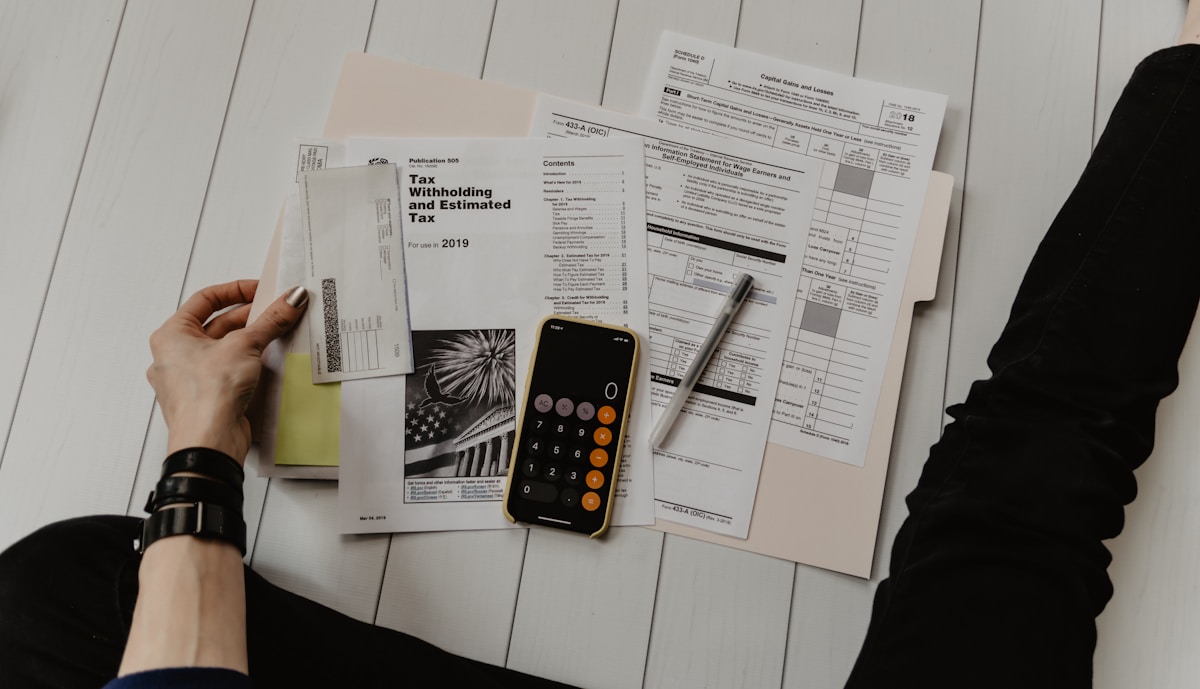
The Double Challenge: Building a Down Payment While Rebuilding Your Credit
Saving for a down payment is one of the most significant financial challenges Canadians face — and when you add bad credit to the equation, the path to homeownership can feel impossibly steep. You need to accumulate tens of thousands of dollars while simultaneously repairing a credit profile that makes lenders nervous. It is a genuine double challenge, but one that thousands of Canadians navigate successfully every year.
The good news is that the strategies for saving money and rebuilding credit are not mutually exclusive. In fact, many of the same financial disciplines — budgeting carefully, reducing debt, making payments on time, and using financial tools strategically — serve both goals simultaneously. Canada also offers specific programs designed to help first-time home buyers save, including the relatively new First Home Savings Account (FHSA) and the longstanding Home Buyers’ Plan (HBP) through RRSPs.
According to the Canadian Real Estate Association (CREA), the average home price in Canada reached approximately $670,000 in early 2026. While prices vary dramatically by region — from under $200,000 in parts of Atlantic Canada to over $1 million in Vancouver and Toronto — the minimum down payment requirements remain consistent across the country. Understanding these requirements, and building a plan to meet them while fixing your credit, is the foundation of this guide.
- Minimum down payment in Canada: 5% on the first $500,000 and 10% on the portion above $500,000 (for homes under $1 million)
- The First Home Savings Account (FHSA) allows tax-deductible contributions of up to $8,000/year ($40,000 lifetime) with tax-free withdrawals for a home purchase
- The Home Buyers’ Plan (HBP) allows RRSP withdrawals of up to $60,000 per person for a first home
- Bad credit adds 12 to 24 months to the homebuying timeline — use this time to save and rebuild simultaneously
- B-lender mortgages are available with credit scores as low as 500-550, but require larger down payments (typically 20%+)
- Automating savings — even $200/month — builds the discipline and the funds needed for homeownership
Minimum Down Payment Requirements in Canada
Before you can create a savings plan, you need to know your target. Canada’s minimum down payment rules are set by federal regulation and apply to all insured mortgages (those with less than 20 percent down).
| Purchase Price | Minimum Down Payment | Example Down Payment |
|---|---|---|
| Up to $500,000 | 5% | $25,000 on a $500,000 home |
| $500,001 to $999,999 | 5% on first $500K + 10% on remainder | $50,000 on a $750,000 home |
| $1,000,000 or more | 20% minimum (no CMHC insurance available) | $200,000 on a $1,000,000 home |
The Bad-Credit Down Payment Reality
Here is the critical detail that many guides overlook: the minimum 5 percent down payment only applies to insured mortgages, and mortgage insurance from CMHC, Sagen (formerly Genworth), or Canada Guaranty requires a minimum credit score of approximately 600 to 640. If your credit score is below this threshold, you will not qualify for an insured mortgage, which means:
- Credit score 600-640: You may qualify for an insured mortgage through certain lenders, but at higher rates. The 5 percent minimum applies.
- Credit score 550-599: Most A-lenders will decline. B-lenders may approve with a minimum 20 percent down payment (no insurance required).
- Credit score below 550: Private lenders may approve with 20 to 35 percent down payment. Interest rates will be significantly higher (7 to 12 percent or more).
This means that bad-credit buyers often need to save substantially more than the minimum 5 percent. For a $400,000 home, the target shifts from $20,000 (5 percent) to $80,000 (20 percent) — a fourfold increase that significantly extends the savings timeline.
Mortgage Insurance Requires Minimum Credit Standards
CMHC, Sagen, and Canada Guaranty — the three mortgage insurers in Canada — all require borrowers to meet minimum credit score thresholds. If your score is below approximately 600, you will not qualify for mortgage insurance, which means you cannot purchase with less than 20 percent down through traditional lenders. This single fact is the most important reality check for bad-credit buyers: your savings target is likely 20 percent of the purchase price, not 5 percent. Plan accordingly.
The First Home Savings Account (FHSA): Your Best Savings Tool
Introduced in April 2023, the First Home Savings Account is the most powerful savings tool available to aspiring Canadian homeowners — and it is available to anyone who meets the eligibility criteria, regardless of credit score.
FHSA Key Features
- Annual contribution limit: $8,000 per year
- Lifetime contribution limit: $40,000
- Tax treatment of contributions: Fully tax-deductible (like an RRSP)
- Tax treatment of growth: Tax-free (like a TFSA)
- Tax treatment of withdrawals: Tax-free when used for a qualifying home purchase
- Carry-forward: Up to $8,000 of unused contribution room can carry forward to the next year (maximum single-year contribution of $16,000)
- Eligibility: Canadian residents aged 18+ who have not owned a home in the current year or the previous four calendar years
- Account lifespan: 15 years from opening, or until age 71
The Double Tax Advantage
The FHSA is uniquely powerful because it combines the best features of an RRSP and a TFSA. Consider this example:
| Scenario | FHSA | TFSA | Regular Savings Account |
|---|---|---|---|
| Annual contribution | $8,000 | $8,000 | $8,000 |
| Tax refund (30% bracket) | $2,400 | $0 | $0 |
| Effective cost to save $8,000 | $5,600 | $8,000 | $8,000 |
| Growth taxed? | No | No | Yes |
| Withdrawal taxed? | No (qualifying purchase) | No | N/A (interest already taxed) |
| 5-year accumulation (at 4% growth) | $43,330 + $12,000 in tax refunds | $43,330 | ~$41,000 (after tax on interest) |
Over five years, an FHSA contributor in a 30 percent tax bracket effectively saves $55,330 ($43,330 in the account plus $12,000 in tax refunds that can be saved separately) — compared to $43,330 with a TFSA and approximately $41,000 in a regular savings account. The FHSA advantage is substantial and should be the first priority for any aspiring homeowner’s savings strategy.

The Home Buyers’ Plan (HBP): Using Your RRSP for a Down Payment
The Home Buyers’ Plan allows first-time buyers to withdraw up to $60,000 from their RRSPs (per person, so $120,000 for a couple) tax-free for a home purchase. The withdrawn amount must be repaid to your RRSP over 15 years, starting the second year after the withdrawal.
HBP Key Details
- Maximum withdrawal: $60,000 per person
- Eligibility: First-time buyer (have not owned a home in current year or previous four calendar years)
- RRSP seasoning requirement: Contributions must be in the RRSP for at least 90 days before withdrawal
- Repayment period: 15 years, beginning the second year after withdrawal
- Minimum annual repayment: 1/15 of the withdrawn amount (e.g., $4,000 per year on a $60,000 withdrawal)
- Penalty for missed repayments: Missed amounts are added to your taxable income for the year
Combining FHSA and HBP
You can use both the FHSA and the HBP for the same home purchase. For a couple, this creates a potential combined total of:
- FHSA: $40,000 per person x 2 = $80,000
- HBP: $60,000 per person x 2 = $120,000
- Total potential: $200,000 (plus investment growth)
Even for individual buyers, combining $40,000 from an FHSA with $60,000 from the HBP provides up to $100,000 toward a down payment — enough for 20 percent on a $500,000 home.
I always recommend that my clients open an FHSA as early as possible, even if homeownership feels years away. The contribution room starts accumulating the year you open the account, and unused room carries forward. Even contributing $100 per month builds toward the future while generating immediate tax savings. For clients with bad credit who may need three to five years before they can qualify for a mortgage, the FHSA provides the perfect savings vehicle during the credit-rebuilding period.
Practical Savings Strategies on a Tight Budget
When your credit is bad, your financial situation is often tight across the board. Saving for a down payment requires creative, disciplined strategies that extract maximum savings from limited income.
-
Automate Your Savings Immediately
Set up an automatic transfer on payday — even if it is only $50 or $100 — to your FHSA or TFSA (earmarked for the down payment). Automation removes the temptation to spend the money. Treat this transfer as a non-negotiable bill, just like rent or utilities. As your income grows or debts are paid off, increase the automatic amount. A $200 bi-weekly automatic transfer accumulates $5,200 per year — $26,000 over five years, before accounting for investment growth.
-
Redirect Tax Refunds and Windfalls to Savings
If you contribute to an FHSA, you will receive tax refunds from the deductions. Commit 100 percent of those refunds to your down payment savings. Similarly, redirect any windfalls — tax refunds, work bonuses, inheritances, gifts, GST/HST credit payments, Canada Child Benefit increases — directly to your savings. A single $2,400 tax refund deposited into the FHSA each year adds $12,000 over five years to your savings.
-
Cut One Major Expense Temporarily
Identify your single largest discretionary expense and eliminate or significantly reduce it for the savings period. Common candidates include: reducing a vehicle to one per household (saving $500-$800/month in payments, insurance, gas, and maintenance), downgrading housing temporarily (a smaller rental can save $300-$600/month), or eliminating dining out (the average Canadian household spends $280/month on restaurants and takeout). Cutting one major category can redirect $3,000 to $9,000 per year to savings.
-
Generate Additional Income Streams
Side income — even temporary — can dramatically accelerate down payment savings. Options include: freelancing in your professional skill set, driving for rideshare services (Uber, Lyft), renting a spare room or parking space, selling unused items (Canadians hold an estimated average of $4,000 in sellable unused items), or taking on overtime at your current job. An additional $500 per month from side income adds $6,000 per year to your savings — potentially cutting your timeline by one to two years.
-
Use Cash-Back and Rewards for Savings
If you are using a cashback credit card (paid in full each month), redirect all cashback earnings to your down payment fund. On $2,000 per month in card spending at 1.5 percent cashback, you earn $360 per year — modest, but it compounds over time. Some apps like Ampli, Drop, or Checkout 51 offer additional cashback on purchases that can be redirected to savings.
Monthly Savings Targets by Home Price
The following table shows how much you need to save monthly to accumulate a 5 percent or 20 percent down payment over different timeframes:
| Home Price | 5% Down | 20% Down | Monthly to Save 20% in 3 Years | Monthly to Save 20% in 5 Years |
|---|---|---|---|---|
| $250,000 | $12,500 | $50,000 | $1,389 | $833 |
| $350,000 | $17,500 | $70,000 | $1,944 | $1,167 |
| $500,000 | $25,000 | $100,000 | $2,778 | $1,667 |
| $650,000 | $40,000 | $130,000 | $3,611 | $2,167 |
| $800,000 | $55,000 | $160,000 | $4,444 | $2,667 |
For bad-credit buyers who likely need 20 percent down, the monthly savings targets are substantial — reinforcing why a three- to five-year plan combining savings and credit rebuilding is often the most realistic approach.
The best time to start saving for a down payment was five years ago. The second best time is today. Even $100 per month, automated and consistent, creates momentum that builds on itself — financially and psychologically.
Rebuilding Credit While Saving: The Dual Strategy
The most efficient approach to homeownership with bad credit is to rebuild your credit score and save for a down payment simultaneously. These two goals are not in conflict — they are complementary.
Credit-Building Actions That Cost Nothing
- Pay all existing bills on time: Payment history is 35 percent of your credit score. Setting up automatic minimum payments on all accounts prevents missed payments while you redirect extra funds to savings.
- Reduce credit utilization: As you pay down existing credit card balances, your utilization ratio improves — this is the second-most-important scoring factor (30 percent). Every dollar paid toward credit card balances both reduces debt and improves your score.
- Dispute credit report errors: Review your Equifax and TransUnion reports for inaccuracies. Correcting errors can add 20 to 50 points at no cost. Use free reports by mail or through Borrowell and Credit Karma Canada.
- Avoid new credit applications: Each application generates a hard inquiry that temporarily lowers your score. During your savings period, avoid unnecessary credit applications.
Credit-Building Actions With Minimal Cost
- Secured credit card ($50 to $300 deposit): A secured card from Home Trust, Capital One, or Neo Financial costs only the refundable security deposit. Use it for small purchases and pay the balance in full each month. This builds positive payment history and demonstrates credit management ability.
- Credit-builder loan ($10 to $30/month): Products from Refresh Financial or Spring Financial function like a forced savings plan that also reports positive payment history. Monthly costs are modest and the funds accumulate for you.
- Become an authorized user (free): If a family member with good credit adds you as an authorized user on their card, the account’s positive history may appear on your credit report — building your score at no cost.
The 50/30/20 Rule Adapted for Down Payment Saving
The traditional 50/30/20 budgeting rule allocates 50 percent of after-tax income to needs, 30 percent to wants, and 20 percent to savings and debt repayment. For down payment savers with bad credit, consider a modified 50/20/30 split: 50 percent to needs, 20 percent to wants, and 30 percent to debt repayment plus down payment savings. On a $4,000 monthly after-tax income, this redirects an additional $400 per month from wants to savings — adding $4,800 per year to your down payment fund while still allowing $800 per month for discretionary spending.

Where to Park Your Down Payment Savings
Where you save matters almost as much as how much you save. The right account maximizes growth while keeping your money safe and accessible when you need it.
| Account Type | Current Rate Range | Tax Treatment | Best For |
|---|---|---|---|
| FHSA (HISA) | 3.5% – 4.5% | Tax-deductible in, tax-free growth, tax-free out | First priority for all eligible buyers |
| TFSA (HISA) | 3.5% – 4.5% | Not deductible, tax-free growth, tax-free out | Second priority after maxing FHSA |
| RRSP (for HBP) | 3.5% – 4.5% (HISA) | Tax-deductible in, tax-free out (HBP), must repay over 15 years | Large down payments — up to $60K per person |
| GIC (1-year, in FHSA/TFSA) | 3.8% – 4.8% | Tax-sheltered if held within FHSA/TFSA/RRSP | Funds not needed for 12+ months |
| Regular savings account | 0.5% – 3.0% | Interest taxed as income | Overflow after registered accounts are maxed |
Best High-Interest Savings Accounts for Down Payment Savings
Several Canadian institutions offer competitive high-interest savings accounts that can be held within an FHSA or TFSA:
- EQ Bank: Consistently offers rates among the highest in Canada. Available as FHSA, TFSA, and non-registered savings. No fees, no minimum balance.
- Wealthsimple Cash: Competitive rates with a user-friendly app. Available as TFSA and non-registered accounts. FHSA available through Wealthsimple Invest.
- Tangerine: Offers promotional rates for new deposits (often 5 percent or higher for the first few months). Available as TFSA, RRSP, and non-registered. FHSA available.
- Simplii Financial: No-fee banking with competitive savings rates. Available as FHSA, TFSA, and RRSP.
- Oaken Financial: High-rate GICs and savings accounts. Ideal for longer-term down payment savings.
Additional Down Payment Programs and Incentives
Beyond the FHSA and HBP, several federal, provincial, and municipal programs can help with your down payment or reduce the cost of homeownership.
First-Time Home Buyer Incentive (FTHBI)
The federal First-Time Home Buyer Incentive provides a shared-equity mortgage — the government contributes 5 percent (existing home) or 10 percent (new construction) of the purchase price toward your down payment. This is not a grant; it is a shared-equity arrangement that must be repaid after 25 years or upon sale. The program has income limits and maximum purchase prices that vary by region.
First-Time Home Buyers’ Tax Credit (HBTC)
The federal HBTC provides a non-refundable tax credit of $10,000, resulting in up to $1,500 in tax savings for qualifying first-time buyers. This credit is claimed on your tax return for the year of purchase.
Land Transfer Tax Rebates
Several provinces offer land transfer tax rebates for first-time buyers:
- Ontario: Up to $4,000 rebate on provincial land transfer tax. City of Toronto offers an additional rebate of up to $4,475 on the municipal land transfer tax.
- British Columbia: Full exemption from property transfer tax on homes up to $500,000 (partial exemption up to $525,000) for first-time buyers.
- Prince Edward Island: First-time buyers may be eligible for a land transfer tax exemption.
Provincial and Municipal Programs
Some provinces and municipalities offer additional support:
- Alberta: No land transfer tax (one of the few provinces without one)
- Saskatchewan: No land transfer tax
- Nova Scotia: The Down Payment Assistance Program provides up to $25,000 in forgivable loans for eligible buyers
- Various municipalities: Check your local municipal government for first-time buyer incentive programs — several cities across Canada offer grants, forgivable loans, or tax rebates
Mortgage Options for Bad-Credit Buyers
Understanding what mortgage options will be available when you are ready to buy helps you set appropriate savings targets and credit score goals.
| Lender Type | Min. Credit Score | Min. Down Payment | Typical Rate | Additional Costs |
|---|---|---|---|---|
| A-Lender (Big 5 Banks) | 650+ | 5% (insured) | 4.5% – 5.5% | CMHC insurance premium (2.8% – 4.0%) |
| B-Lender (Alt. lenders) | 500-600 | 20% | 5.5% – 8.0% | Lender fee 0.5% – 1%; broker fee |
| Private Lender | No minimum | 20-35% | 7% – 14% | Lender fee 2-4%; legal fees; broker fee |
| Credit Union | Varies (often more flexible) | 5-20% | 4.5% – 6.5% | May require membership; possible insurance |
Credit Unions: The Often-Overlooked Option for Bad-Credit Buyers
Credit unions are provincially regulated and are not bound by the same federal mortgage rules as chartered banks. This gives them flexibility to approve mortgages for borrowers with lower credit scores, non-traditional income (self-employed, gig workers), or unique situations. Credit unions like Meridian (Ontario), Vancity (BC), Conexus (Saskatchewan), and Servus (Alberta) may offer mortgage options to borrowers who would be declined by the Big Five banks. Building a relationship with a credit union early in your savings journey can improve your approval odds when you are ready to buy.

Creating Your Personalized Savings and Credit-Building Timeline
Every homeownership journey is unique, but here is a realistic timeline framework for bad-credit buyers:
-
Months 1-3: Assessment and Foundation
Pull credit reports from both bureaus, dispute any errors, and note your current score. Open an FHSA if eligible. Set up automatic savings transfers. Obtain a secured credit card if you do not already have one. Calculate your target down payment based on realistic home prices in your desired area and the lender type you are likely to qualify for. Create a detailed monthly budget.
-
Months 4-12: Aggressive Saving and Credit Building
Maximize FHSA contributions (up to $8,000 in the first year). Make all payments on time across all accounts. Keep secured card utilization below 20 percent. Begin paying down any outstanding collections or high-interest debt. Consider a credit-builder loan for additional positive reporting. Track your credit score monthly through free monitoring tools.
-
Months 13-24: Acceleration
Continue maximizing FHSA contributions ($8,000 in year two). If your credit score has improved to 600+, apply for an unsecured credit card to diversify your credit mix. Redirect tax refunds from FHSA deductions to savings. Reassess your target home price and down payment based on market conditions and savings progress. Begin researching specific neighbourhoods and property types within your budget.
-
Months 25-36: Pre-Purchase Preparation
By this point, you should have $20,000 to $30,000 or more saved (depending on monthly contributions and investment growth). Your credit score should have improved by 80 to 150 points with consistent positive behaviour. Begin speaking with mortgage brokers to understand your current qualifying position. Get a mortgage pre-approval to confirm your budget and identify any remaining credit issues to address. Continue saving while the pre-approval is active.
-
Months 36+: Ready to Purchase
With three or more years of savings and credit building, you are in a strong position. Your FHSA holds up to $24,000 or more (three years of contributions plus growth). Your RRSP funds are available through the HBP. Your credit score should be in the fair-to-good range (620 to 680 or higher). Begin your home search with a clear budget, a confirmed mortgage pre-approval, and the confidence that comes from years of disciplined preparation.
Avoiding Common Down Payment Pitfalls
The road to a down payment is long, and several common mistakes can derail your progress:
Pitfall 1: Borrowing Your Down Payment
Lenders require that your down payment come from legitimate sources — savings, gifts from immediate family, or registered account withdrawals (FHSA, HBP). Borrowed down payments (from credit cards, lines of credit, or personal loans) are not acceptable for insured mortgages and will be flagged during the underwriting process. The lender will request a 90-day history of your savings to verify the source of funds.
Pitfall 2: Depleting Your Emergency Fund
Using every last dollar for the down payment leaves you vulnerable to the unexpected costs of homeownership — repairs, property taxes, insurance, and utilities. Maintain an emergency fund of at least $5,000 to $10,000 separate from your down payment. Lenders also want to see that you have at least 1.5 percent of the purchase price available for closing costs.
Pitfall 3: Making Large Financial Changes Before Closing
Between mortgage pre-approval and closing, do not change jobs, take on new debt, make large purchases, co-sign for anyone, or significantly alter your financial profile. Lenders verify your financial status before closing, and changes can trigger a decline — even with a pre-approval in hand.
Pitfall 4: Forgetting Closing Costs
Beyond the down payment, budget for closing costs of 1.5 to 4 percent of the purchase price:
- Legal fees: $1,500 to $3,000
- Land transfer tax: Varies by province (0 in Alberta/Saskatchewan, up to 2 percent+ in Ontario and BC)
- Home inspection: $400 to $600
- Appraisal fee: $350 to $500
- Title insurance: $200 to $400
- Moving costs: $500 to $3,000
- Property tax adjustment: Varies
- Home insurance (prepaid): $800 to $2,000 per year
Pitfall 5: Neglecting Credit During the Savings Phase
Focusing exclusively on saving while ignoring credit rebuilding extends your timeline. Every month you delay credit improvement is another month you may not qualify for the mortgage you need. Balance both priorities from day one.
Join 10,000+ Canadians who started their credit journey with Credit Resources.
GET STARTED NOWFrequently Asked Questions About Saving for a Down Payment With Bad Credit
Yes, but with significant limitations. A 500 credit score disqualifies you from insured mortgages (which allow as little as 5 percent down), meaning you will need a minimum 20 percent down payment and will likely need to work with a B-lender or private lender. Interest rates at this score level range from 6 to 14 percent depending on the lender, the down payment size, and the property. Additional fees (lender fees, broker fees) add 1 to 4 percent of the loan amount to your upfront costs. While homeownership is possible at 500, spending 12 to 18 months improving your score to 600+ before purchasing will save you tens of thousands of dollars.
The minimum is 5 percent for homes up to $500,000, but bad-credit buyers typically need 20 percent because mortgage insurance is not available below certain credit scores. For a $400,000 home, that means $80,000. However, do not forget closing costs (1.5 to 4 percent of the purchase price) and an emergency fund. A realistic total savings target for a $400,000 home with bad credit is approximately $90,000 to $100,000, including the down payment, closing costs, and reserves.
Yes. The FHSA and HBP are separate programs that can be used simultaneously for the same qualifying home purchase. An individual can contribute up to $40,000 to an FHSA (over five or more years) and withdraw up to $60,000 from RRSPs under the HBP — a combined potential of $100,000 per person. For a couple, both partners can use both programs, potentially accessing up to $200,000 in combined registered savings for a home purchase.
If you do not use your FHSA for a qualifying home purchase, you have several options: transfer the funds to an RRSP or RRIF (without affecting your RRSP contribution room), withdraw the funds as taxable income (similar to an RRSP withdrawal), or keep the account open until the maximum duration (15 years from opening or age 71, whichever comes first). If you transfer to an RRSP, you preserve the tax-deferred status of the funds. You will not get to use the tax-free withdrawal benefit, but you do not lose the original tax deduction.
This depends on the interest rate on your debt versus the return on your savings. As a general rule: pay off high-interest debt first (credit cards at 19 to 22 percent), as no savings account can match those rates. For moderate-interest debt (lines of credit at 7 to 10 percent), a balanced approach works — split extra funds between debt repayment and savings. For low-interest debt (student loans at 3 to 5 percent), prioritize FHSA contributions since the tax deduction and tax-free growth likely exceed the interest cost. From a mortgage-qualifying perspective, reducing existing debt also lowers your debt service ratios, improving your approval odds.
Yes, most Canadian lenders accept gifted down payments from immediate family members (parents, grandparents, siblings). The gift must be a true gift — not a loan — and the lender will require a signed gift letter confirming that no repayment is expected. Some lenders also require proof that the donor has the funds available. The gift recipient does not pay tax on received gifts in Canada (there is no gift tax), but the donor may have tax implications if the gift involves appreciated property or investments. Gifts from non-family members (friends, employers) are generally not accepted by lenders as down payment sources.
From a starting score of 500 or below, expect 18 to 36 months of consistent positive credit behaviour to reach the 620 to 650 range needed for most mortgage approvals. Key milestones: paying all bills on time for six consecutive months can add 30 to 50 points; reducing credit utilization below 30 percent can add 20 to 40 points; and having a 12-month track record with a secured credit card adds credibility with lenders. If you have collections on your report, paying or settling them stops further damage but may not immediately improve your score — the collection entry remains for six years from the date of last activity.

Your Path to Homeownership Starts Now
Saving for a down payment with bad credit is undeniably challenging — but it is far from impossible. Thousands of Canadians in similar situations achieve homeownership every year through disciplined saving, strategic credit rebuilding, and smart use of programs like the FHSA and HBP.
The key is to start today, even if the amounts feel small. Open an FHSA and contribute what you can. Set up a secured credit card and use it responsibly. Automate your savings. Cut one major expense. Monitor your credit score monthly and celebrate every improvement.
In three to five years, you will look back at this starting point and recognize it as the moment you took control of your financial future. The home may still be a few years away, but every dollar saved and every on-time payment made brings it closer.
Bad credit is a temporary condition. Homeownership, achieved through patience and discipline, is a permanent foundation for your family’s financial security.
Related Canadian Credit Guides
- Pre-Construction Condo Buying in Canada: Risks and Financing
- Zoning Changes and Property Value in Canada: Impact on Homeowners
- Foreclosure in Canada: Process, Timeline & How to Avoid It
- Cottage and Recreational Property Mortgages in Canada
- Manufactured Home Communities in Canada: Pad Rent and Financing
Understanding Canadian Mortgage Types and Terms
The Canadian mortgage market offers a range of products that differ significantly from those available in other countries. Understanding each type, term length, and amortization option is essential for what is typically the largest financial decision of your life.
Fixed-rate mortgages lock your interest rate for the entire term, providing predictable payments and protection against rate increases. The most popular fixed-rate term is five years, though terms of one to ten years are available. Fixed rates are determined primarily by Government of Canada bond yields plus a lender spread.
Variable-rate mortgages fluctuate with the lender’s prime rate tied to the Bank of Canada’s overnight rate. Historically, variable rates have saved borrowers money approximately 90 percent of the time over full amortization, though rapid rate increases can cause short-term payment stress.
The mortgage stress test requires borrowers to qualify at their contracted rate plus 2 percentage points or the benchmark rate of 5.25 percent, whichever is higher. This applies to all new mortgages and renewals at a different lender. The stress test significantly impacts purchasing power — qualifying at 5 versus 7 percent means affording roughly 20 percent less home.
Hybrid mortgages allow splitting your mortgage between fixed and variable components, hedging against rate movements in either direction. The distinction between insured, insurable, and uninsurable mortgages also significantly affects your rates. Insured mortgages with under 20 percent down payment receive the best rates due to default insurance protection.
Mortgage Renewal Strategy for Canadian Homeowners
Mortgage renewal is one of the most consequential financial events for homeowners, yet many simply sign the renewal offer from their existing lender without shopping around. This inertia costs Canadian homeowners an estimated $780 million annually in unnecessary interest.
Begin your renewal process 120 days in advance. Most lenders and brokers offer rate holds guaranteeing a quoted rate for 90 to 120 days, giving you time to compare while being protected against rate increases. If rates drop during the hold period, you typically receive the lower rate.
Mortgage brokers access rates from 30 to 50 lenders, including monoline lenders like First National and MCAP that offer rates 0.10 to 0.30 percent lower than Big Five banks. At renewal, switching lenders typically costs zero — your new lender covers legal and appraisal fees. On a $500,000 mortgage, a 0.20 percent reduction saves approximately $5,000 over a five-year term.
When evaluating renewal offers, look beyond the interest rate. Prepayment privileges allowing you to increase payments or make lump sums without penalty vary significantly between lenders and can be worth thousands over the term.
Penalty clauses deserve particular scrutiny. Breaking a fixed-rate mortgage before term end incurs the greater of three months’ interest or the Interest Rate Differential. The IRD calculation varies dramatically between lenders, with Big Five banks using posted rates resulting in penalties of $15,000 to $30,000, while monoline lenders using discounted rates may charge only $3,000 to $8,000 for the same scenario.
First-Time Home Buyer Programs in Canada
Canada offers several programs designed to make homeownership more accessible for first-time buyers. Understanding and strategically combining these programs can save tens of thousands of dollars and make the difference between qualifying for a home and falling short.
The First Home Savings Account allows contributions of up to $8,000 annually to a lifetime maximum of $40,000. Contributions are tax-deductible like RRSPs, and withdrawals for a qualifying home purchase are completely tax-free. This dual tax advantage makes the FHSA the single most powerful savings vehicle available to aspiring Canadian homeowners.
The RRSP Home Buyers’ Plan allows first-time buyers to withdraw up to $60,000 from their RRSPs tax-free for a home purchase. Withdrawals must be repaid over 15 years starting two years after the withdrawal. If combined with a partner also using the HBP, a couple can access up to $120,000 in tax-free RRSP funds. This program can be used simultaneously with FHSA withdrawals, potentially providing up to $160,000 in tax-advantaged home buying funds for a couple.
The First-Time Home Buyer Incentive provides a shared equity mortgage with the federal government contributing 5 to 10 percent of the purchase price as an equity share. This reduces your monthly payments without requiring repayment until you sell the home or after 25 years. The program has income and purchase price limits that restrict eligibility in expensive markets.
The Home Buyers’ Tax Credit provides a non-refundable tax credit of $10,000 for eligible first-time home buyers, resulting in a federal tax reduction of $1,500. Combined with the First-Time Home Buyers’ Tax Credit, land transfer tax rebates available in some provinces can further reduce the upfront costs of purchasing your first home.
Provincial programs add additional benefits. Ontario offers a land transfer tax refund of up to $4,000 for first-time buyers. British Columbia provides a property transfer tax exemption on homes under $500,000 and a partial exemption up to $525,000.

Start Building Better Credit Today
Join 10,000+ Canadians who took control of their financial future with our proven credit-building tools.